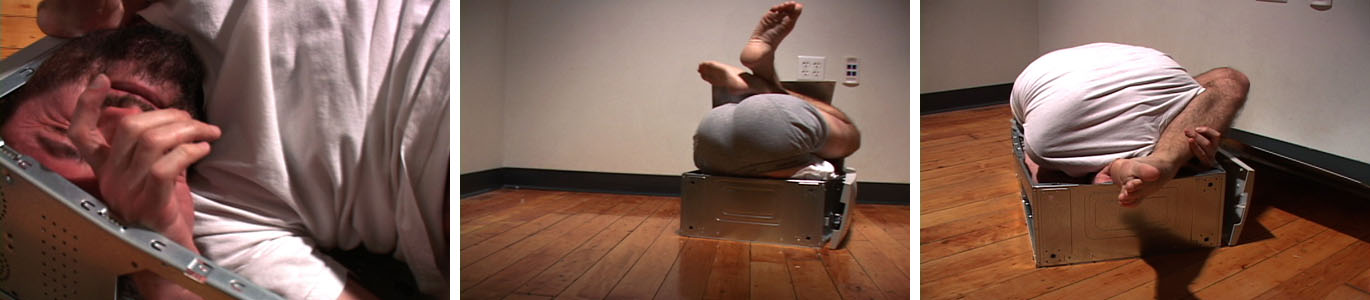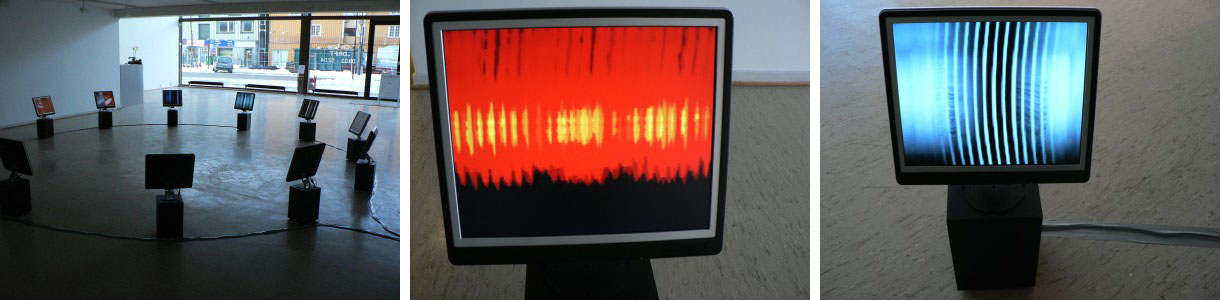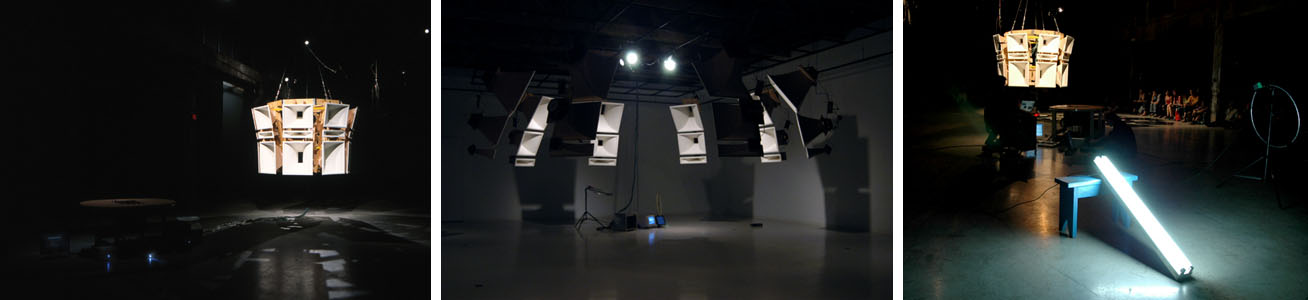
»On Stage« 2007, video installation, 4’53”, loop. By Collectif_Fact.
Interactive, multiple installations made up of various locations, distant from each other, coordinated across the mobile phone network.
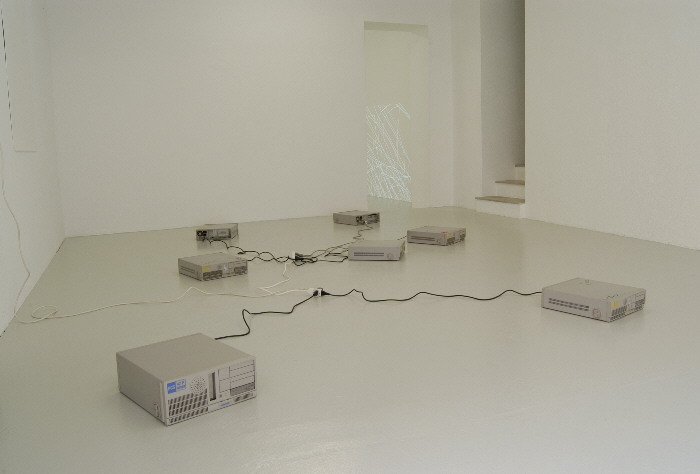
»Programmed machines, partial vision« (computers,cables, silicone). By Maurizio Bolognini .
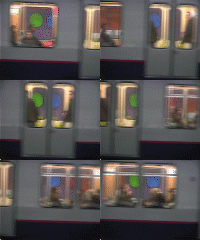
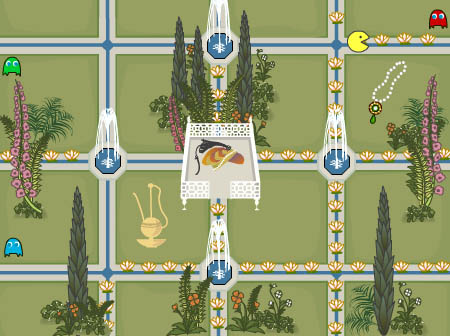
»1982« (2000) is an installation of light and sound at the subway station Gerdesiaweg/Rotterdam. The existing illumination is transformed into a light organ. The lights respond disco-like to the music playing over the intercom. This music consists of hits from 1982, the year the station was built. The replacement of the entire interior is also the end of this installation, which is meant as an ode to the year of the station’s construction.
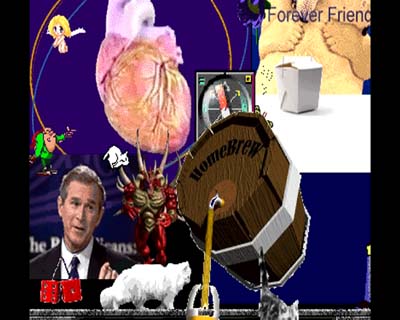
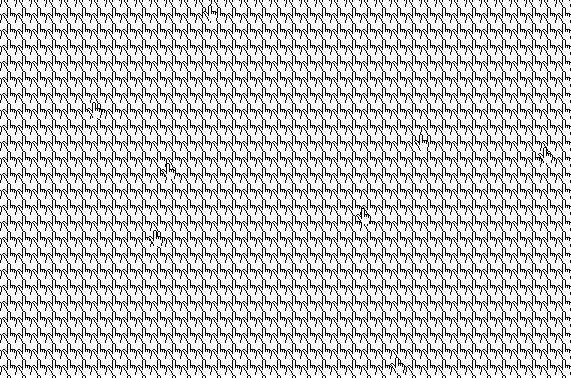
»GIF Museum« (2006) is a pocketmovie for mobile phones constructed from a collection of found GIF’s. Both works by Peter Vink.
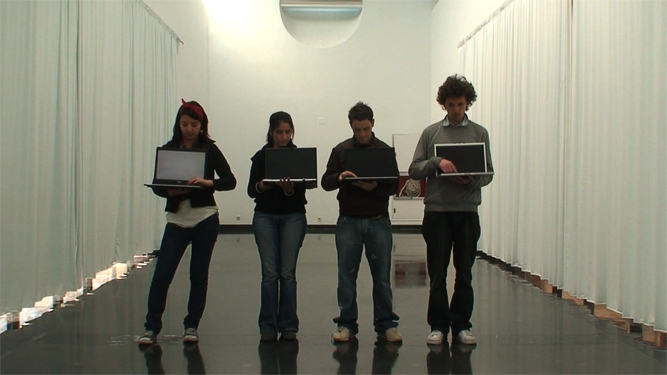
»UNTITLED (NETWORK)«, 2007 performance with 4 laptops featuring Isabel Servan, Ana María Gutiérrez Domínguez, Javier Lobato López and Wojciech Kosma.
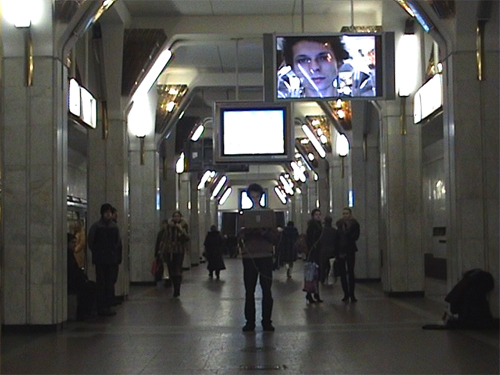
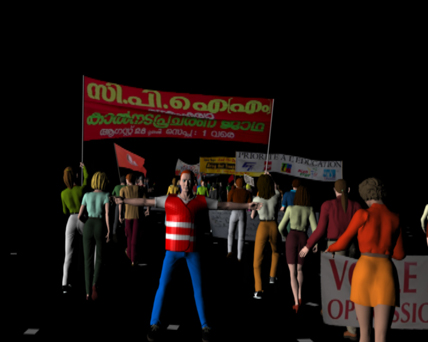
»VICTORY ␄«, 2007 performance with laptop and cable at Victory Square Metro Station in Minsk, Belarus. Both projects by Wojciech Kosma.
»Computer art has not been found out yet. Let us find it out for ourselves.«
From THE MANIFESTO OF COMPUTER ART by Tamás Waliczky, Budapest, 15 January 1989.

»Color Study«,2002 by Tamás Waliczky.
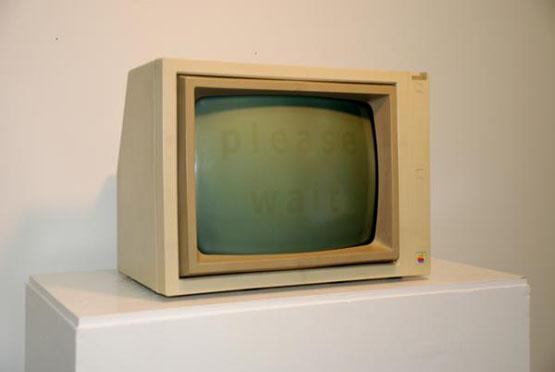
»Screen Burn (please wait)«, 2005. Steven Read wrote a software program in Apple II Integer Basic that displays an image on the monitor’s screen. Then he ran the program continuously for about 6 months. The software image was eventually burned into the screen because the internal phosphor compounds which emit light lost their luminosity and left behind a ghostly trace. The ‘please wait’ text is actually an image which took over 1000 lines of software code to create. The old Apple II operating systems (DOS 3.x, ProDOS, etc.) did not come with any font facilities, if you wanted a font you had to code it from scratch.
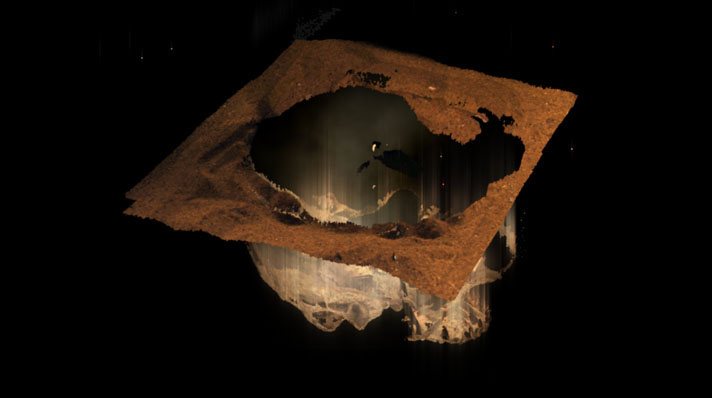
A still from »Self Portrait (abstract plain)«, 2006. The video is created by 3d scan data. Drawing on the historical cannon of self referential portraiture and still life painting, it is a study of material and surface. By Chris Cornish.
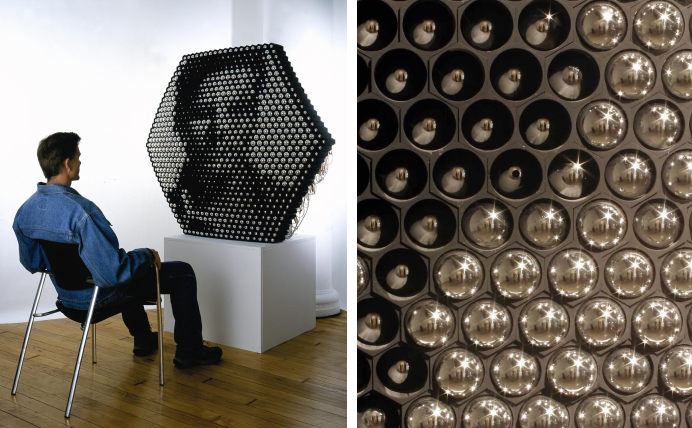
“Shiny Balls Mirror” (921 hexagonal black-anodized aluminum tube extrusion,921 chrome-plated plastic balls,819 motors,control electronics,video camera,computer) by Daniel Rozin. Video.
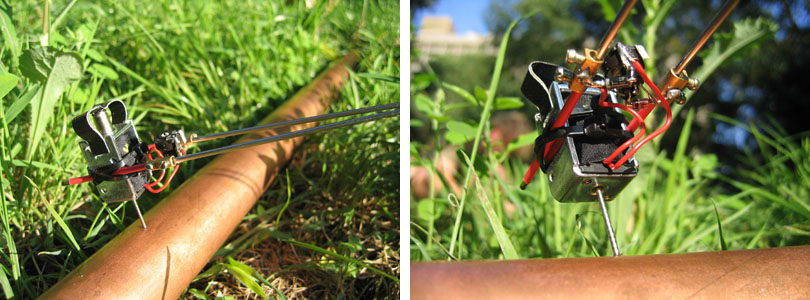
“Resonating-With-Light” (Video) by Edo Paulus is an installation that consists of multiple small electronic units in a natural environment with sunlight. Each unit collects solar energy and transforms this energy into a repetitive bouncing of itself onto a metal tube, thus creating a kinetic and acoustic reaction to sunlight.
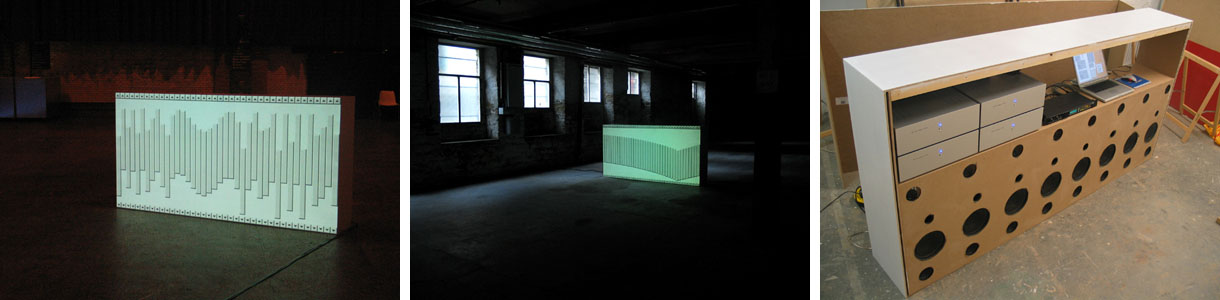
“Scrollbars” (Video) by Edo Paulus and Jan Robert Leegte.
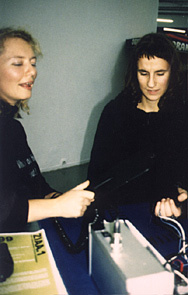
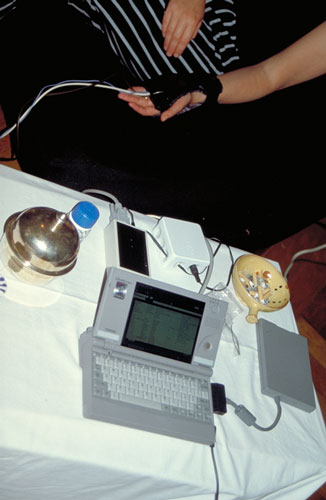
“Lie detector” (camera,video system,glove,sensors,computer) – this performance measured the degree of sincerity of feelings expressed by participants (artists or visitors) about the works exhibited. Each response was analyzed by a system of sensors connected to a computer. A “beep” rang out if the participant was faking his opinion. By Olga Kisseleva.
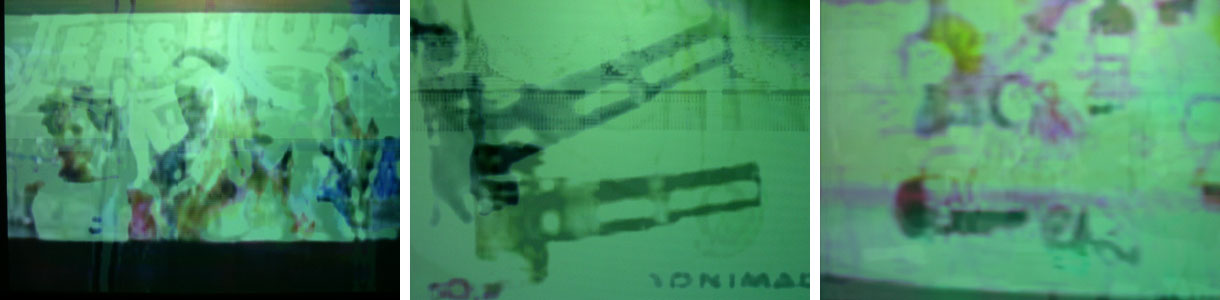
“Corrosion” is based on eth0, a library that is capable of sniffing a network and could be classified as a hacker tool were it not for the purpose of the library, which is auralization and visualization of underlying network data flow. eth0 allows to use the heartbeat of an underlying network in order to trigger realtime audio and video generation (and possibly a lot more). the video and audio data that is transformed, triggered, altered and spit out by corrosion comes entirely from peer to peer networks. Video: Martin Pichlmair. Audio: Thomas Grill.
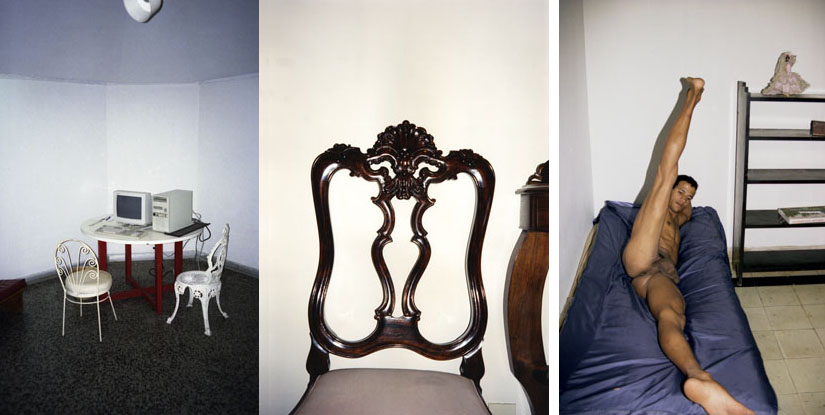
»Computers, chairs and table«, »Chair and table« and »Eusebio« taken from the series »Fotogalleriet« (1998) by Marcelo Krasilcic.
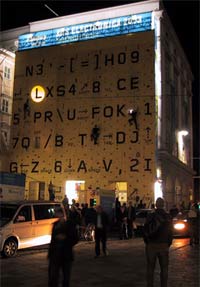
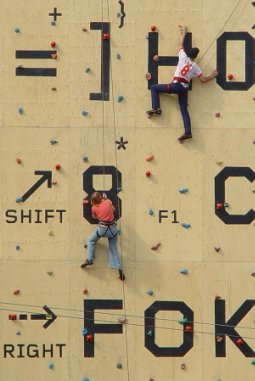
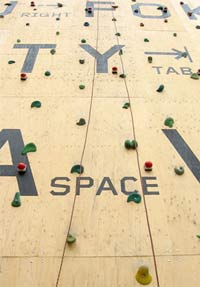
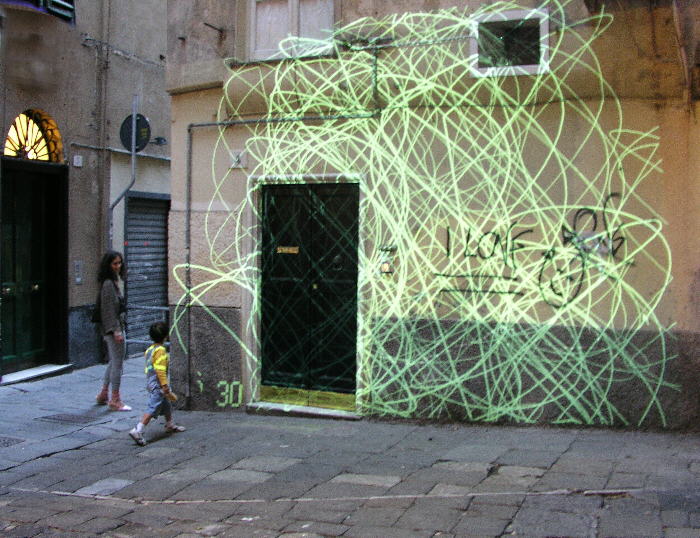
“Teleklettergarten” – The facade of the art university in Linz was converted into a climing wall with oversized keyboard keys and buttons as a input interface for a computer. The visitors who participated in Teleklettergarten passed through a trainee programm and where trained as software developers. Through physical commitment the climbers and the programmers collaboratively inputed code into an oversized programming environment. In a week-long performance the collaborators programmed codes, scripts and tools and demonstrated various software functions. A collaboration between Bitnik and the group FOK.