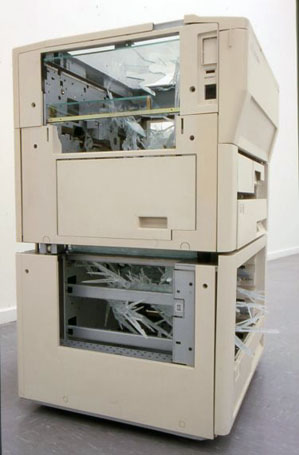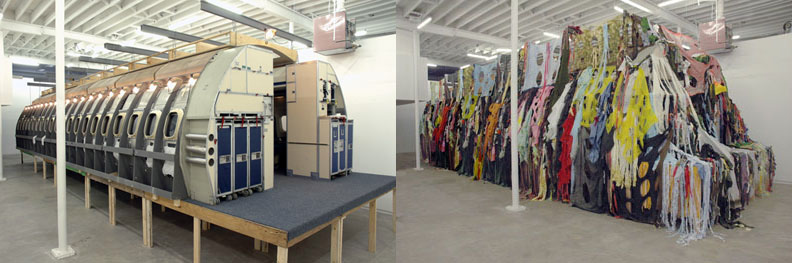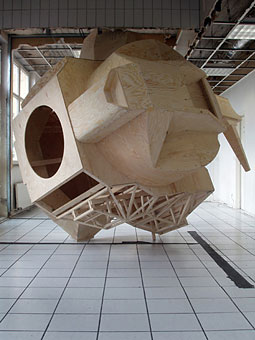
“Objet Trouvé” – Apollo 11 on a scale of 1:1 (with Lutz-Rainer Müller) and
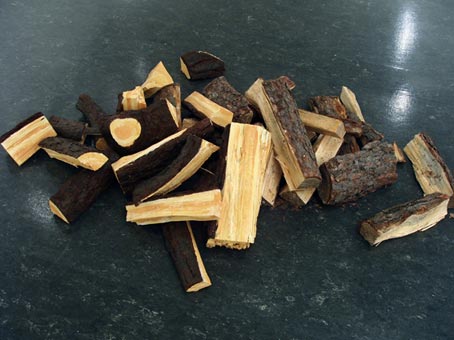
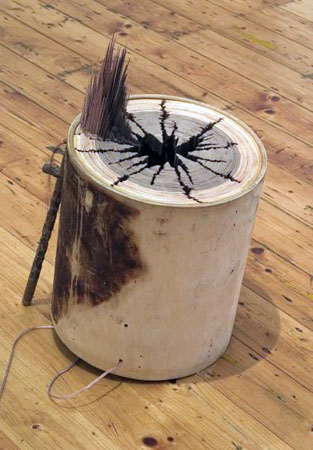
“Partially Painted Heap of Wood” by Jan Freuchen.
“Objet Trouvé” – Apollo 11 on a scale of 1:1 (with Lutz-Rainer Müller) and
“Partially Painted Heap of Wood” by Jan Freuchen.
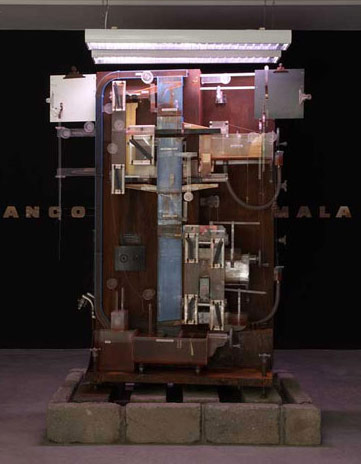
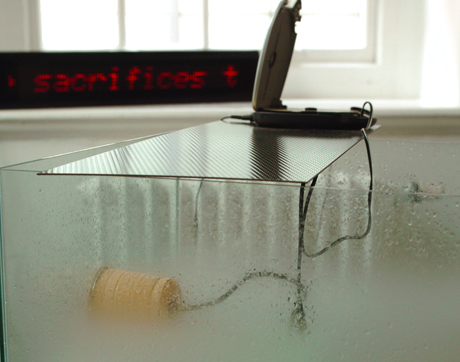
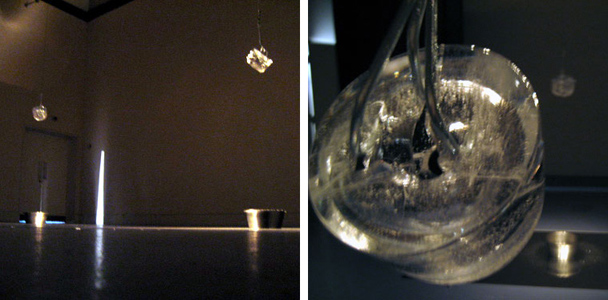
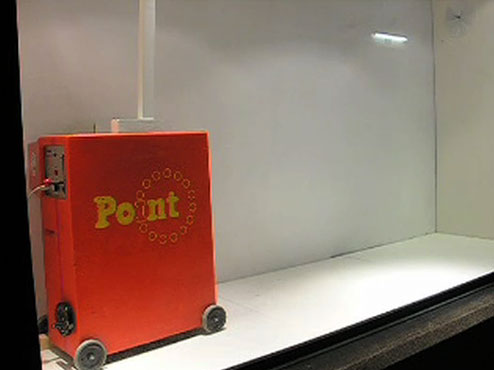
“The Fountain of Prosperity” (2007) by Michael Stevenson. “The Fountain of Prosperity” is a reconstruction of the “Moniac”, a machine designed in the late 1940s by New Zealand economist Bill Phillips to illustrate the concept of monetary flow in national economies. A fixed volume of red-dyed water, representing money, is pumped through a system of transparent tubes and sluices into clear chambers representing factors such as “surplus balances” and “International Monetary Funds”.
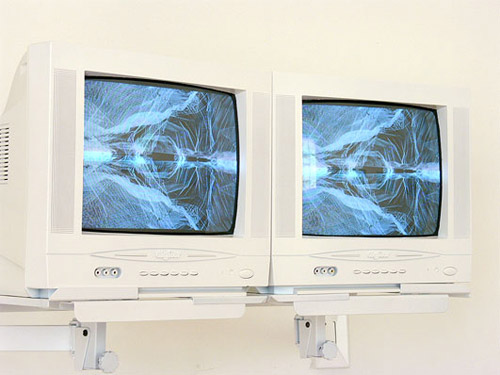
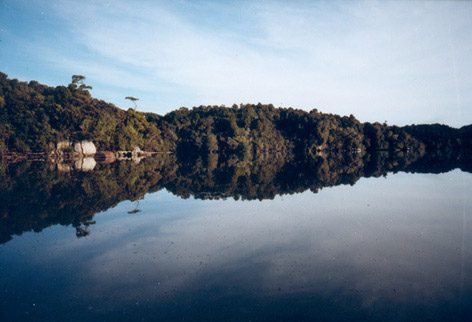
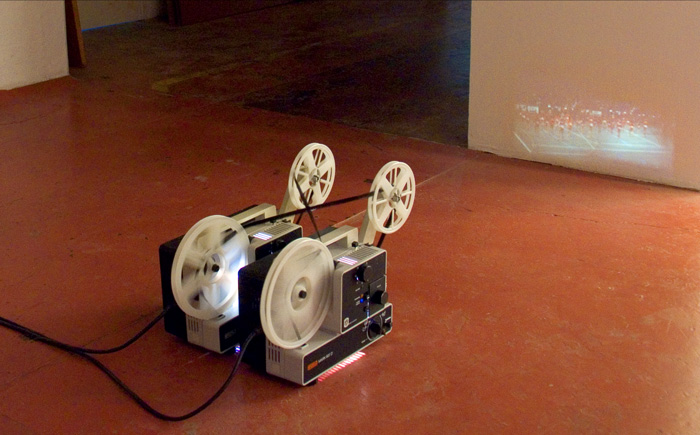
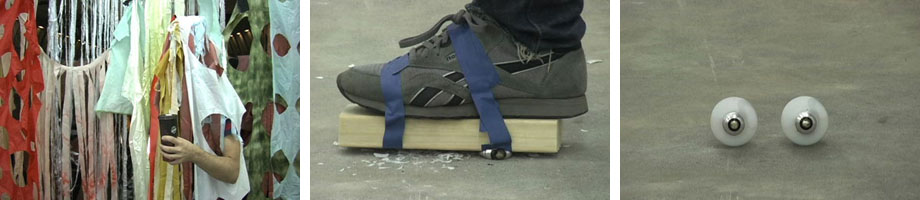
Images from »Aipotu: Love Will Tear Us Apart«, 2004. Installation inspired by a visit to the abandoned Whalers Base in New Zealand (Stewart Island), consisting of large colour photograph series entitled Aipotu: Psychogeographies ; a blackboard mental-map of Stewart Island and; a psychedelic computer animation accompanied with a mixed-up soundtrack (Joy Divisions Love Will Tear Us Apart performed by a string quartet). By Mladen Bizumic. Video.
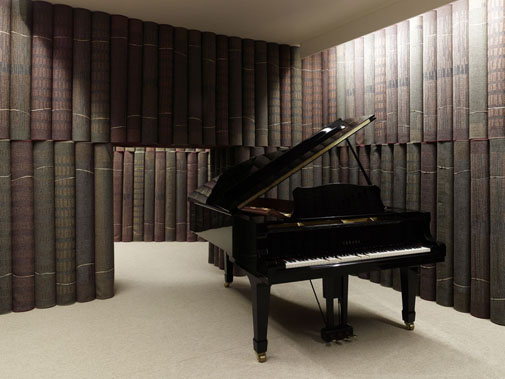
»Plight 2«, 2007, by Matthieu Laurette. An update of the 1985 Joseph Beuys installation »Plight« originally exhibited in London and then bought by and reconstructed at the Centre Pompidou in Paris.
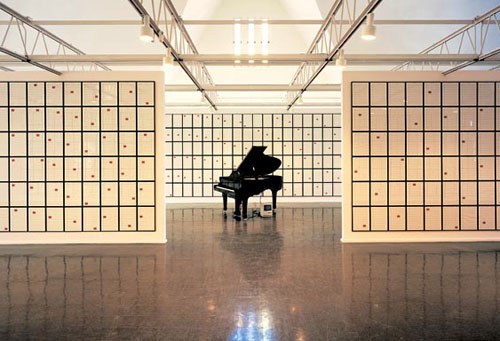
»School of Velocity«, 1995, by Rodney Graham, combines the piano exercise of the same name with Galileo’s equation of the acceleration of falling objects. The result is the piano piece progressively slowing down, with longer and longer pauses between notes. Based on a few bars of music cobbled together out of the score of Wagner’s Parsifal by Engelburt Humperdinck, Wagner’s assistant, to compensate for a problem the opera company was experiencing in synching up its music and scenery. Graham adds a progression of repetitions, whose durations are determined by the prime numbers between 3 and 47, for each of the fourteen instrumental sections that would be playing Humperdinck’s interpolation. The result is an opera that doesn’t end until the year 38,969, 364,735.
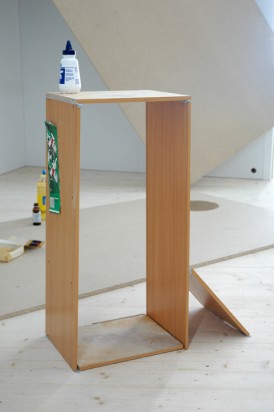
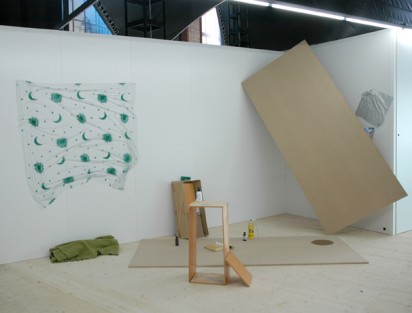
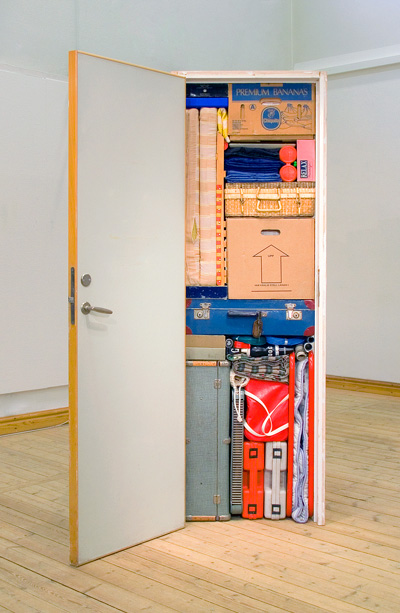
“The Natural Order Of Tact” (wood, oil, bootles, glue, artists books, flat-pack shelving, blu-tac, spray can, plastic, woolen blanket, static electricity, paper, cardboard) by Simon Denny.