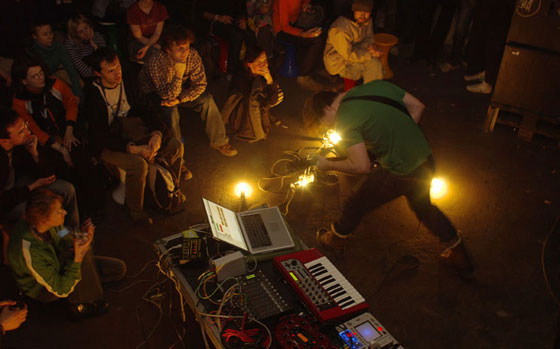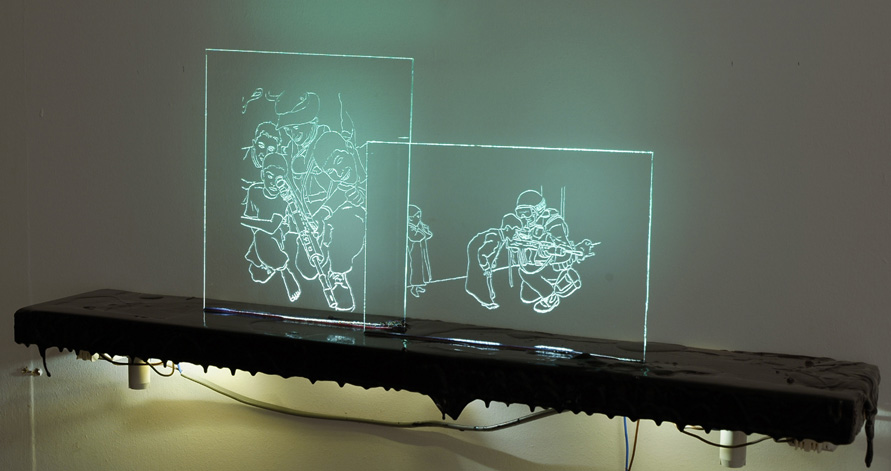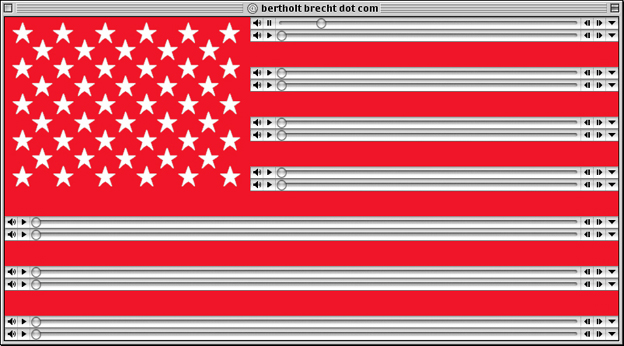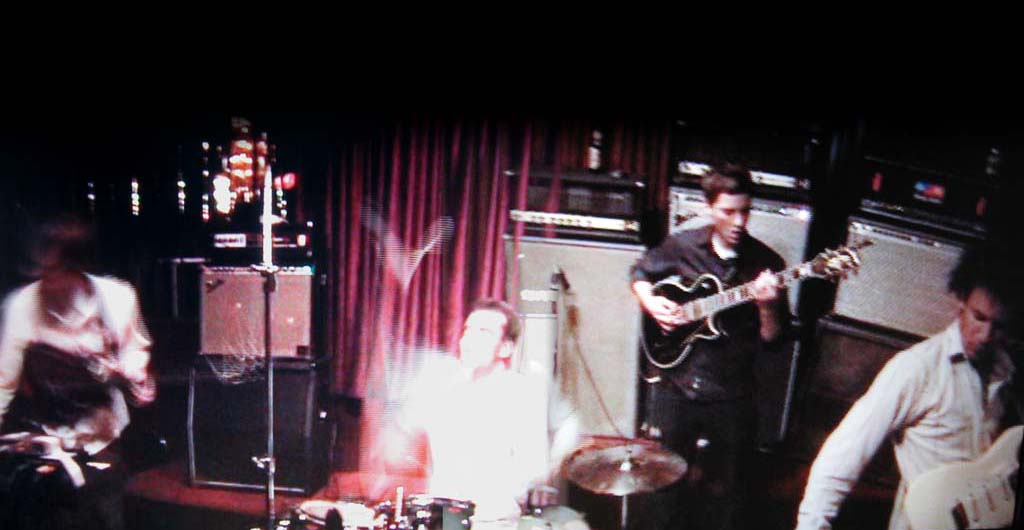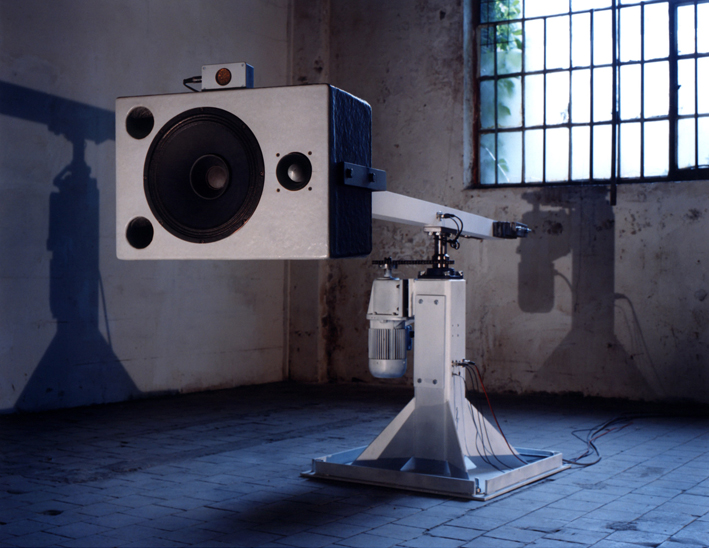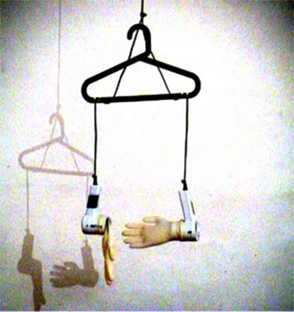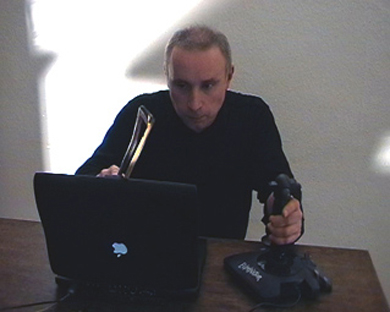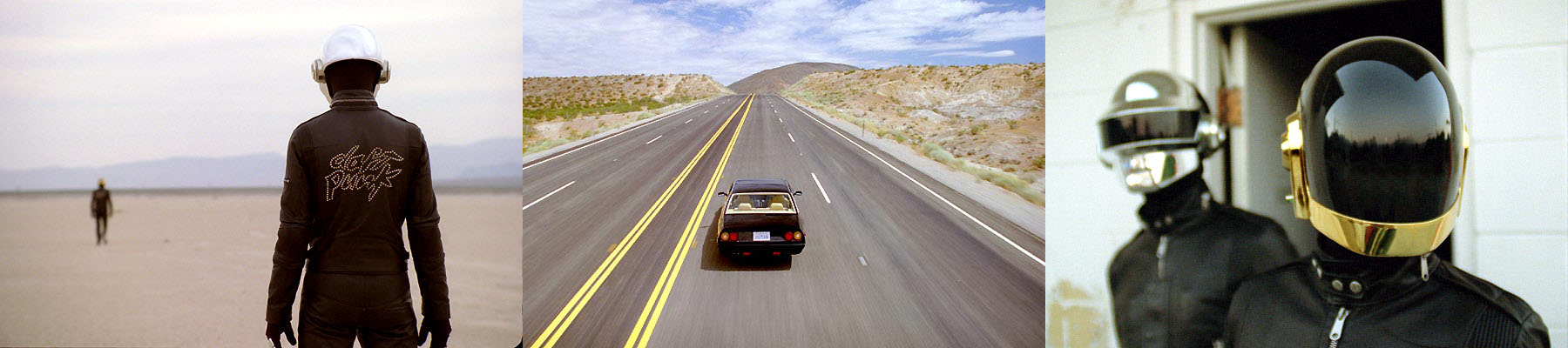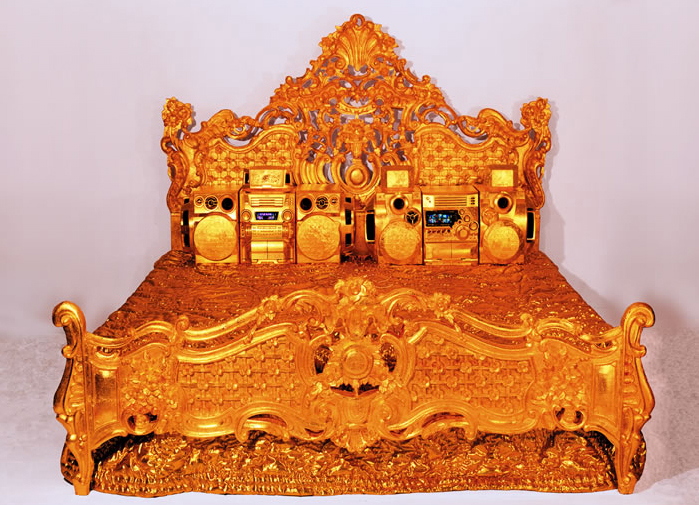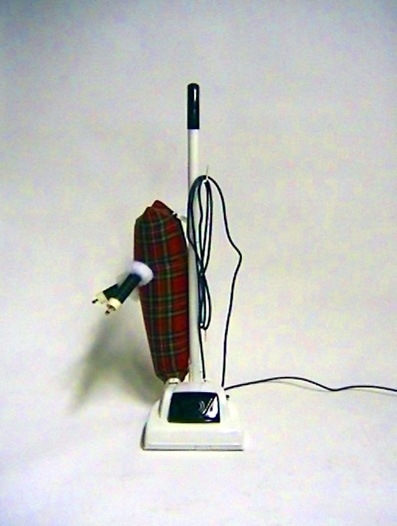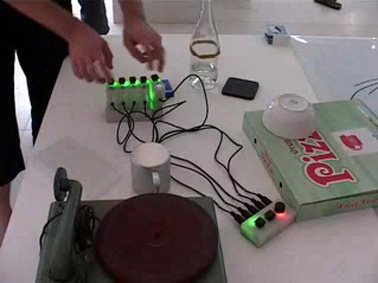
“Beatbox” by Andy Huntington. Video.

»Tokyo Arcade Warriors – Shibuya« is part of an ongoing series of videoportraits of players of video and computer games. It was shot in three different Public Gaming Arcades near Shinjuku/Tokyo. The faces of the players are the only visible evidence of the game being played. Their facial reactions are synced with the sounds emerging from the game consoles.
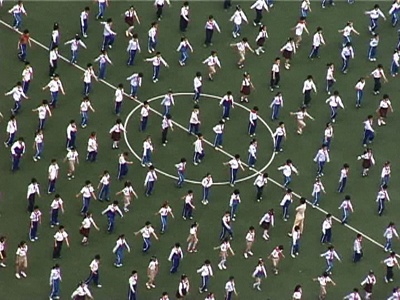
The film »Brilliant City« was shot from the 34th floor of a residential complex in Shanghai. The film reacts to a particular visual paradigm, which is well known from strategy and simulation computer games (Sim City, The Sims) as the so called God View.It is the distanced perspective usually taken on by city planners, game players or politicians. Both projects by Axel Stockburger.
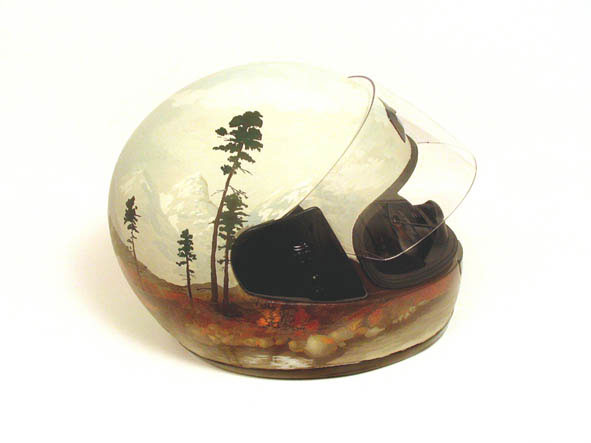
The Man of Speed’s helmet. By Juneau Projects.
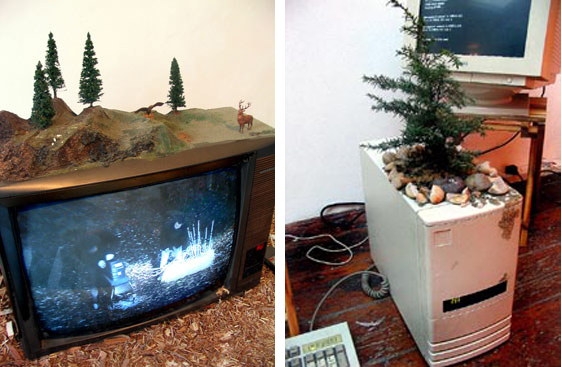
The beauty royale, video installation with sculpted tv, woodchipper and dowel-mounted transducer microphones. A forest, computer system with small pine tree growing in casing.
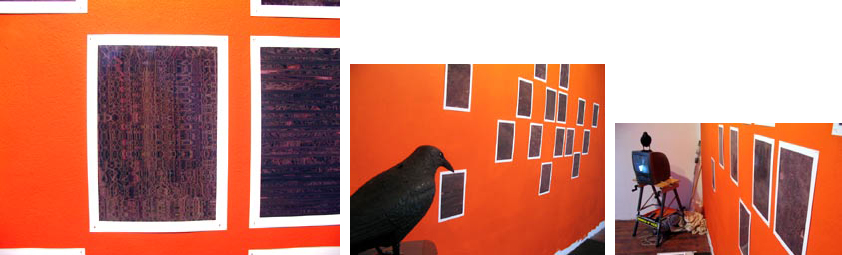
Good morning captain, video installation with inkjet prints. A video of a scanner being dragged over a forest floor placed alongside printouts of the resulting scans.

Mic campfire. Six microphones were suspended above a large campfire in Grizedale Forest. The microphones were lowered into the fire in turn, the sound was relayed on a pa system. A rich future is still ours. A video installation where sheets of paper with attached transducer microphones are fed through a paper shredder.
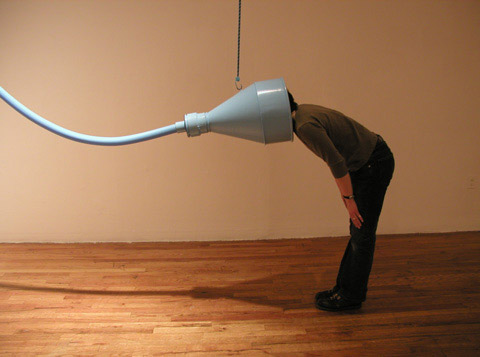
Two pop songs, How deep is your Love by the Bee Gees and Love by John Lennon, are acoustically transmitted through 400 feet of tubing through the museum. The songs emanate from the basement’s defunct boiler unit into a tubing system which follow the existing water and electrical pipes, winding through the hallways and stairwells of the building. The songs eventually emit from a funnel which hangs in the gallery space two floors above, leaking sound at points along the route.
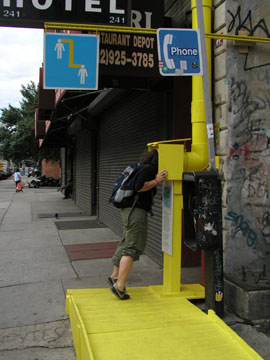
»Can You Hear Me?« is a functional alternative telephone. It uses PVC pipe and mirrors to make an aural and visual communication link from the second floor lobby of the Sunshine Hotel, to the street below. Passers-by on the street can call up through the tube and be heard in the Sunshine’s communal lobby area. Both projects by Julianne Swartz.
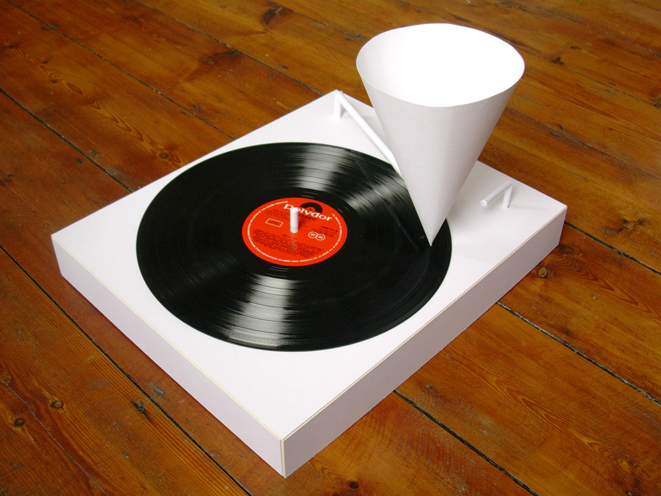
Paper Record Player. To play the record the handle needs to be turned in a clockwise direction at a steady 331/3 rpm. The paper cone then acts as a pick up and amplifies the sound enough to make it audible.
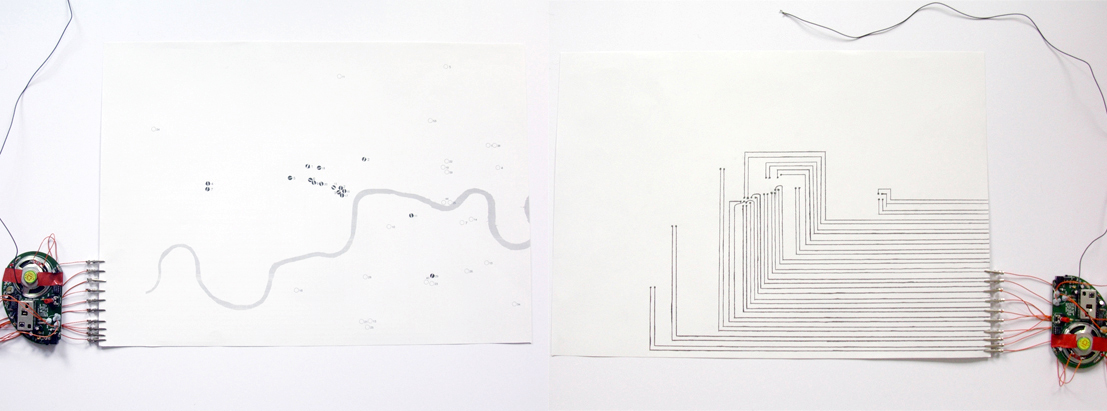
FM Radio Map. This map plots the location of FM commercial and pirate radio stations within London. The poster works in its own right as a piece of information design, but when connected to the modified radio it becomes part of the interface. Placing a metal contact onto each point enables us to listen to the sound broadcast live from that location. By Simon Elvins.
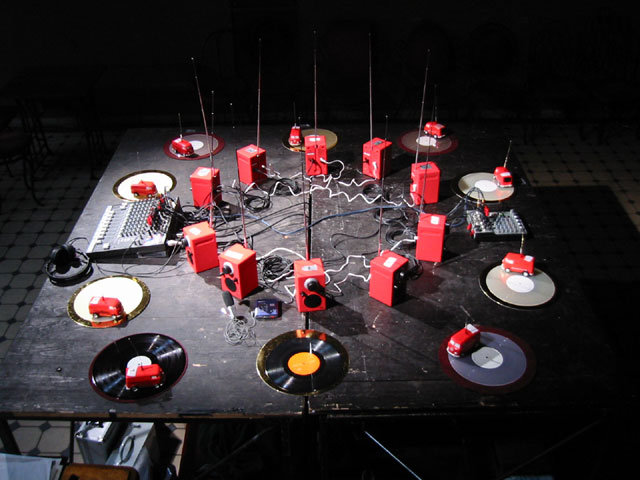
Yokomono consists of 10 small car-shaped record players, a corresponding set of FM radios and two mixing desks. The cars, known as “vinyl killers,” have been customised with wireless FM transmitters. As they spin around the vinyl, they transmit their signal to the FM radios tuned to a special Yokomono frequency. This transmission is then mixed, edited and manipulated in real-time by members of the Staalplaat Soundsystem.
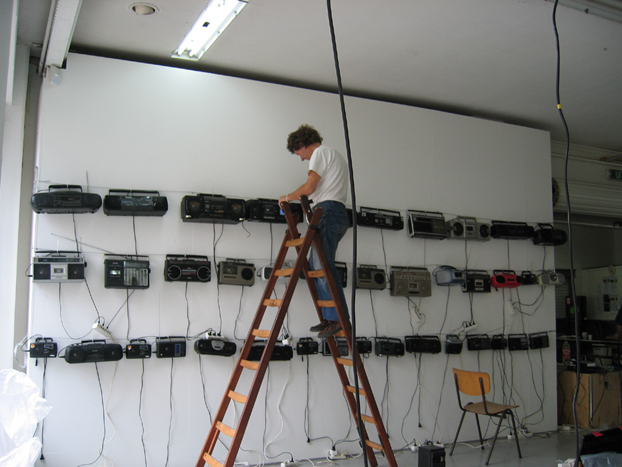
Further sound installations by Staalplat Soundsystem.
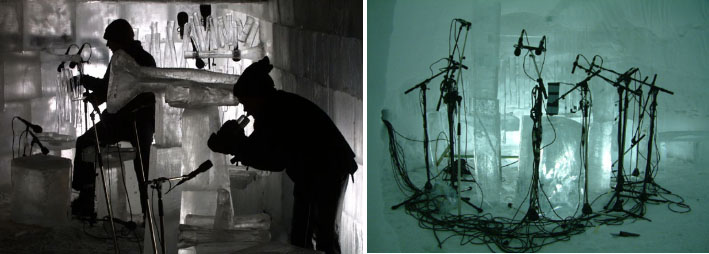
All Ice Records is a Norwegian independent record company. All Ice Records exclusively releases music played on instruments made from ice.
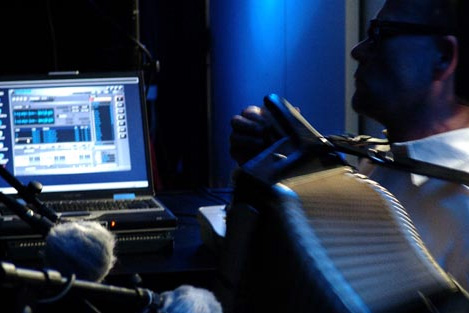
Otto Lechner performing live via internet-soundbridge with musicians from Zimbabwe at the Ars Electronica festival. Read more: www.mulonga.net