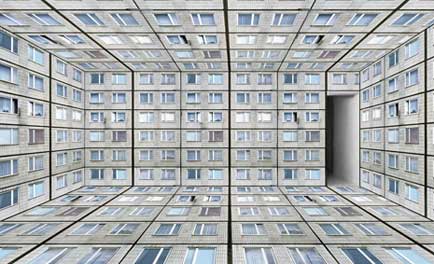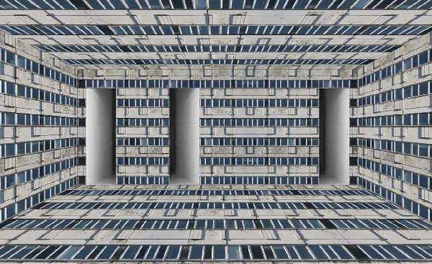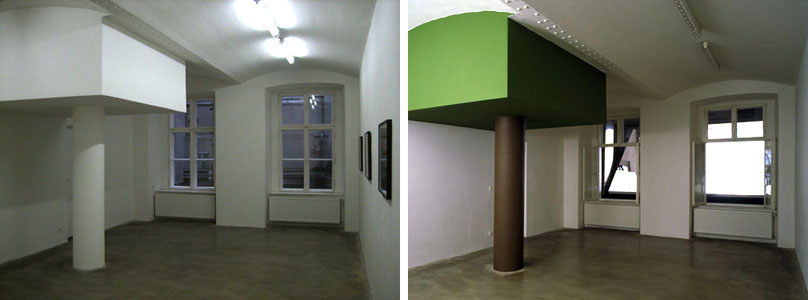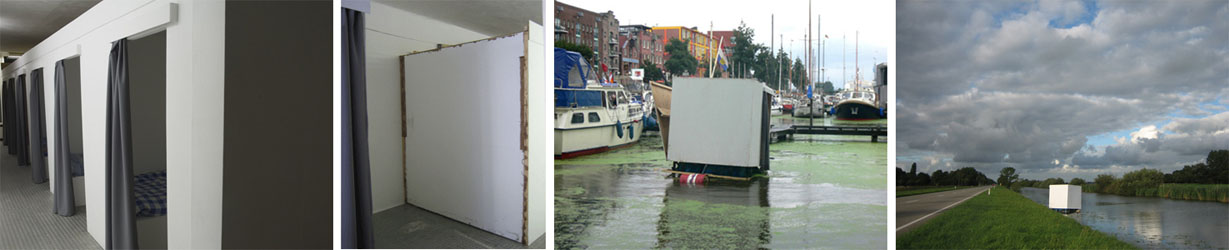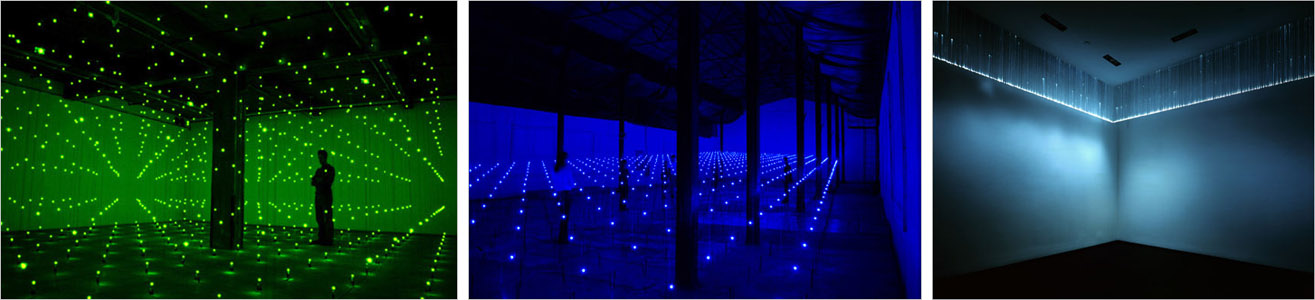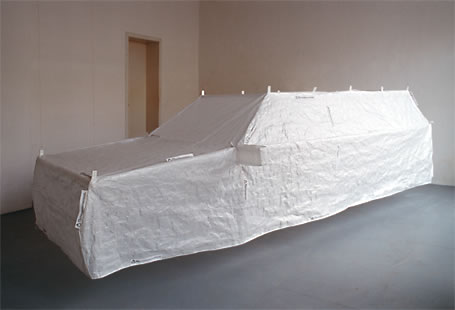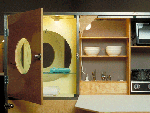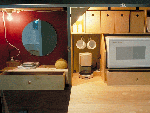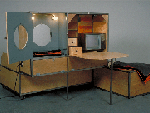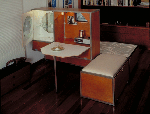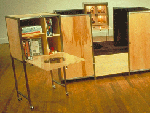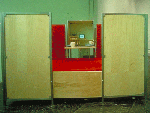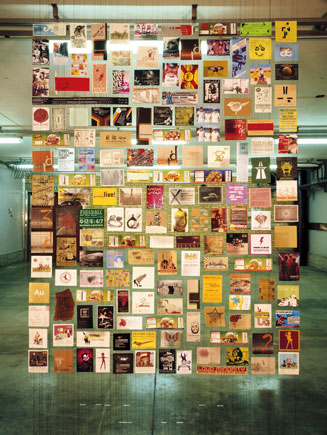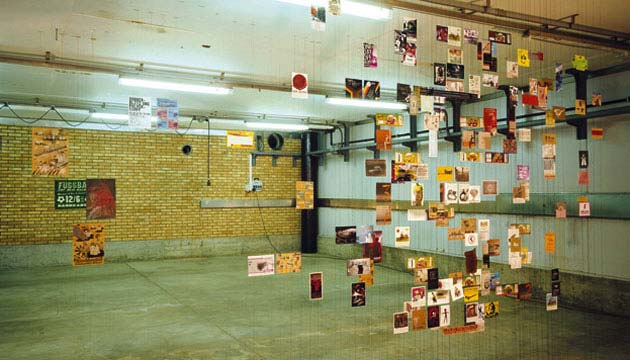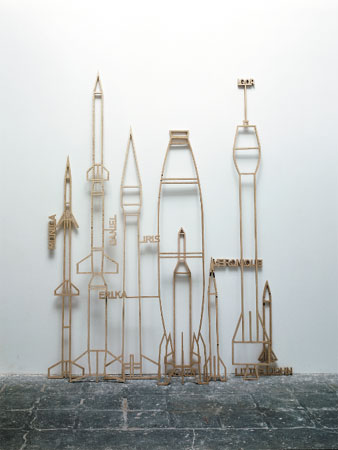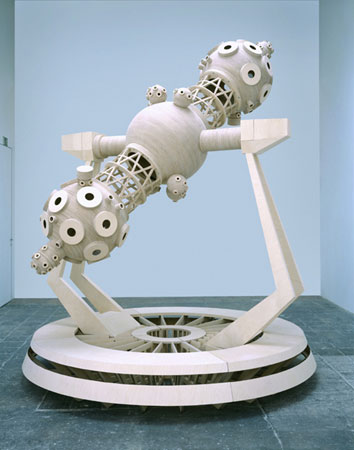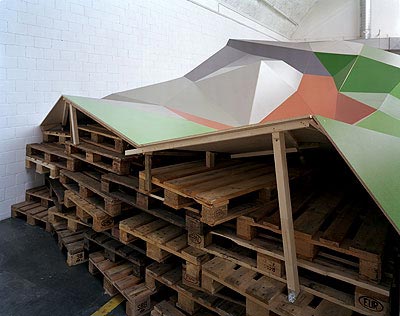
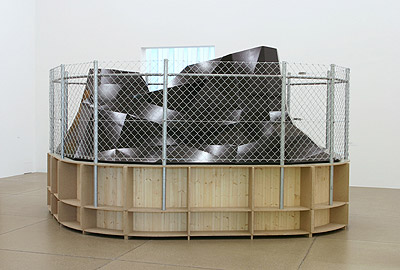
“Finkenweg 9a” and “Terrain” by Daniel Robert Hunziker.
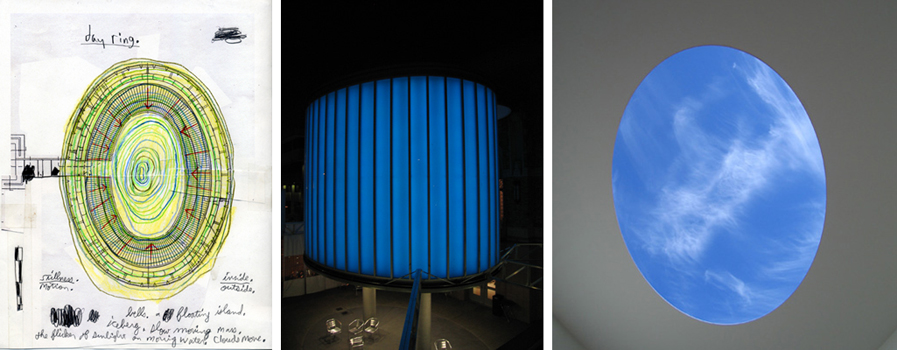
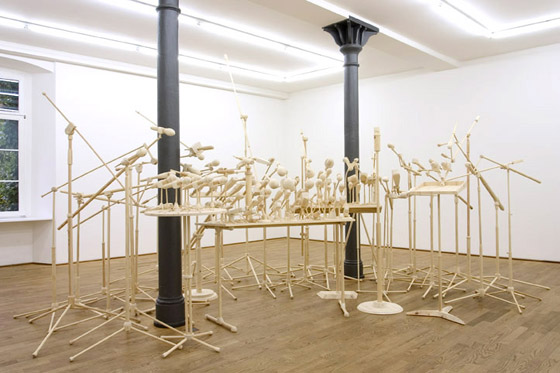
“Day Ring”, a sound installation for the interior of James Turrell’s skyspace, by Steve Roden.
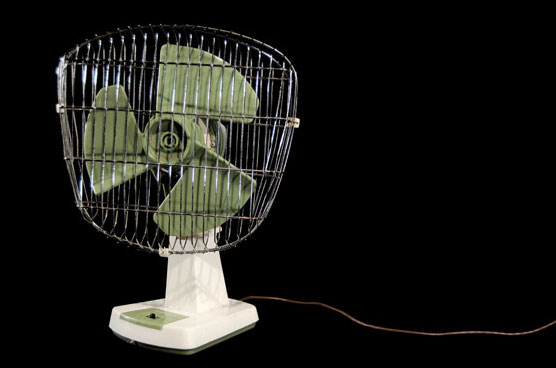
“Fan” by Simon Heijdens. This Fan restores the natural timeline of a space by exactly reproducing the speed and intensity of wind gusts that pass the building, through the use of a connected sensor placed outside.
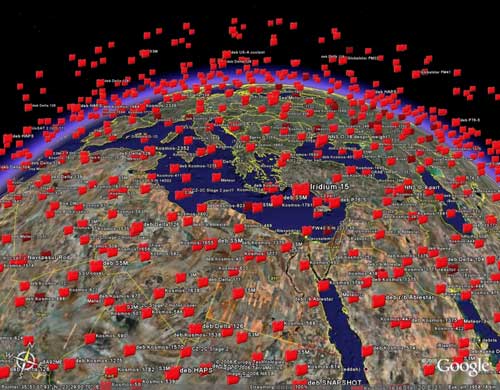
»Space Junk Spotting« 2006, is a project composed of mechanical and programming equipment linked to a database at a U.S. government-owned space observatory; this database contains the fullest possible data on the extent of the pollution and presents remarkable scientific methods for determining the position of space junk. In this way, the wider Internet public is offered a folder of information about space debris, which is strewn across the popular three-dimensional interface Google Earth. The tactical potential of this catalogue is the possibility it provides for finding a creative and constructive solution to the problem of reusing material whose position in usable orbits is already determined, without the enormous initial costs that arise whenever rockets are shot into space. By Saso Sedlacek.
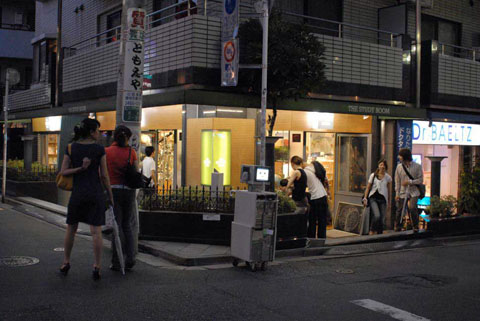
»Beggar 2.0« another project by Saso Sedlacek is a robot for the materially deprived in Tokyo. It is made of old electronics and computer spare parts. The original 1.0 was tested in Slovenian shopping malls where it is forbidden to beg, but no such rule was made for robots. The new upgrade version of Beggar robot made at IAMAS institute in Japan was tested in the beginning of July 2006 on Tokyo streets where begging isn’t really a frequent phenomena and where interface communication is ubiquitous.Video.
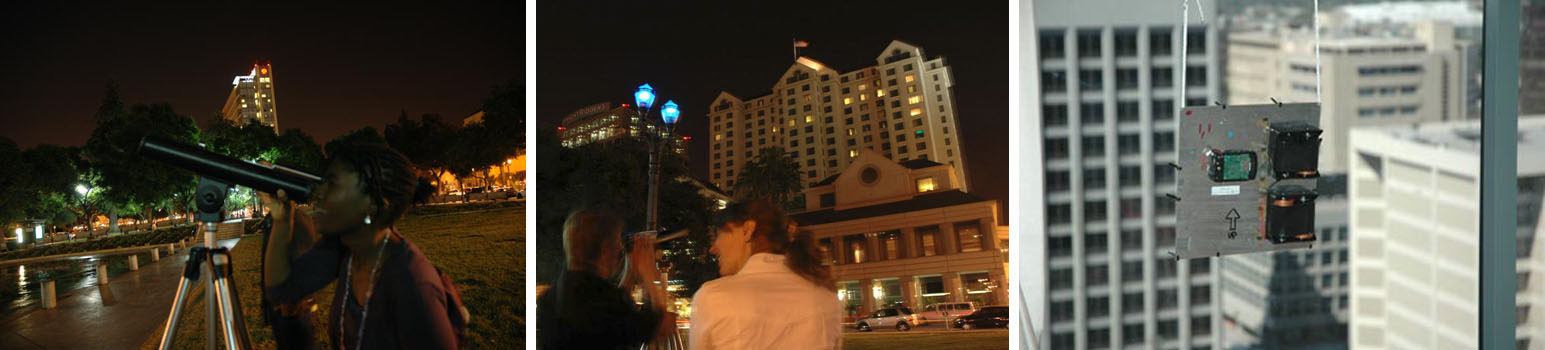
“Park View Hotel” by Ashok Sukumaran. Using specially-built pointing devices, audiences in the park can access interior hotel spaces, by “pinging” them optically. Once found and hit (two different modes on the scope) the interiors release their properties into a wireless network… the color of the interior propagates stochastically, leaking out of the building skin, jumping across the street, and entering some street-lights in the park below.
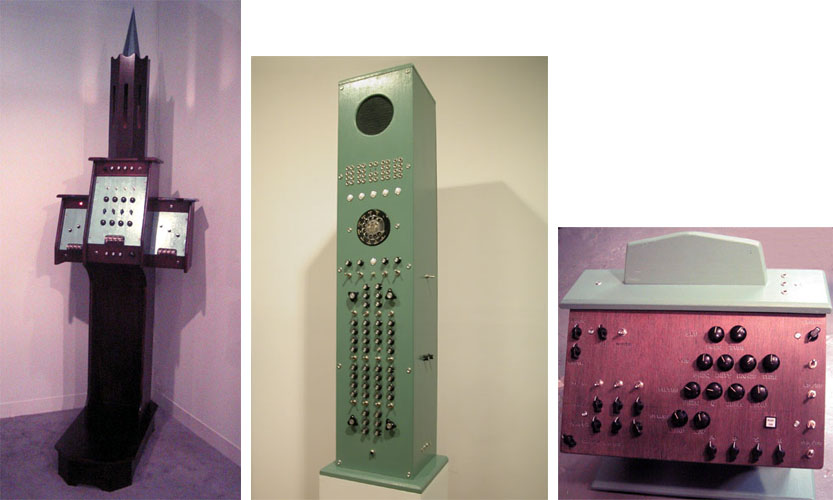
»Melody Gin«, »The Rotary Ordinator« and the »The Astro-Space Organ«. Music instruments called Dewanatrons by Leon Dewan and Brian Dewan, a collaborative team who make hand-crafted, semi-automatic, electronic musical instruments.
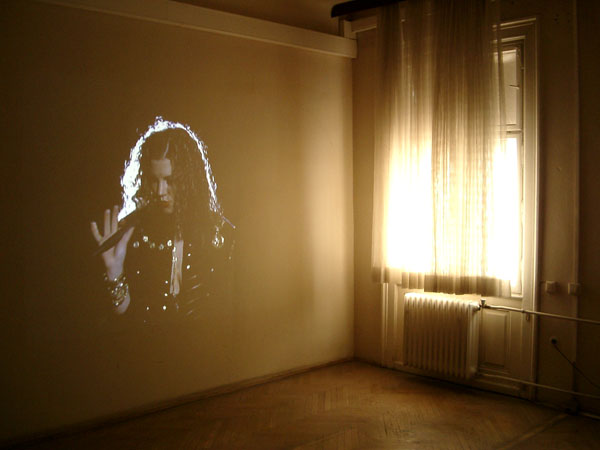
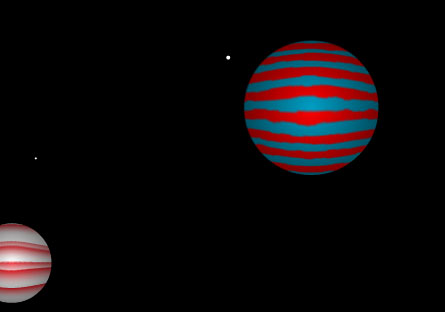
Pictures of Space Invasion, an exhibition series that takes place in changing spaces in order to revive various districts of the city in the course of temporary invasions.
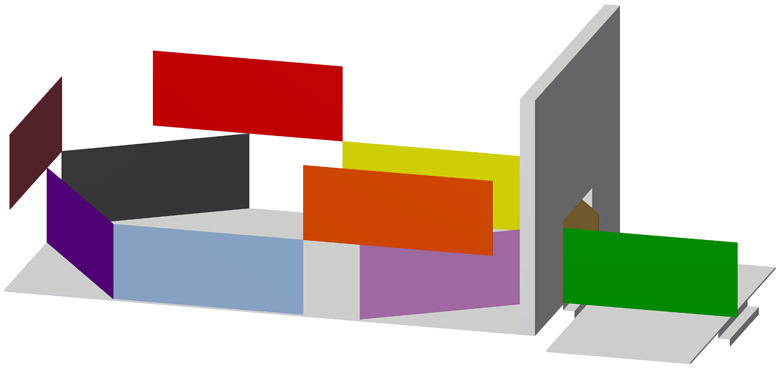
»Untitled«, 2006 (Acrylic on wood panels) and
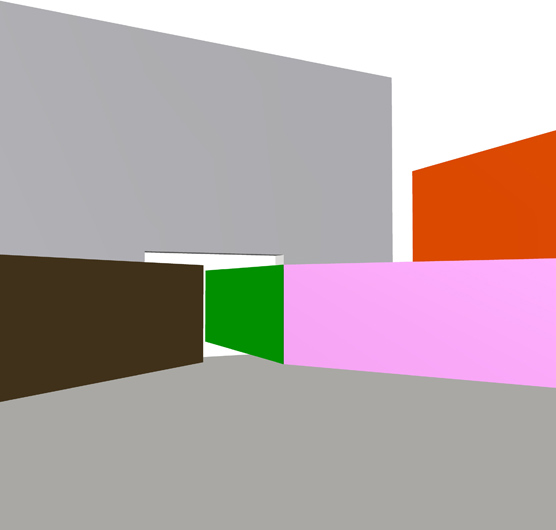
»Untitled«, 2006 (Acrylic on wood panels) by Gerwald Rockenschaub.
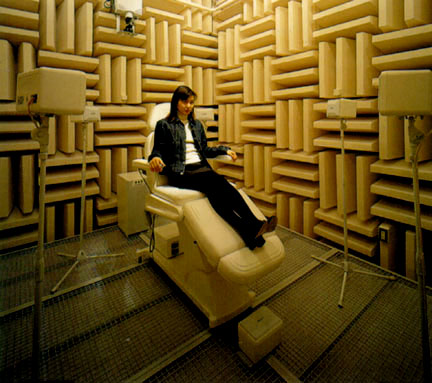
»World, Membrane and the Dismembered Body« by Seiko Mikami. The project takes place in an anechoic (echo-free) room. In this silence, you first hear the sounds inside of your body (heart and lung sounds), and then their amplified versions from audio speakers. The lag of sounds creates a gap between your mind and body. The sense of body vanishes and the fragmented senses awaken. The sounds are amplified and transformed within this space to introduce a perception-driven architecture.
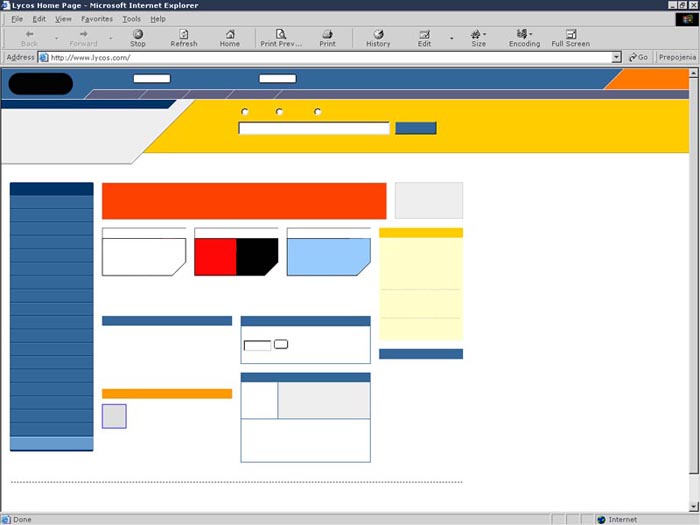
»www.lycos.com«. The idea of the »Project www« refers to the mechanisms of manipulation, affecting the seemingly free space of Internet. The author has erased and cleaned out all textual or visual content of selected web-sites, leaving behind their original graphic only. This way he confronted viewer with well known but empty visual representations, counterpointing the reality of web-sites always packed with information. By Marek Kvetan.
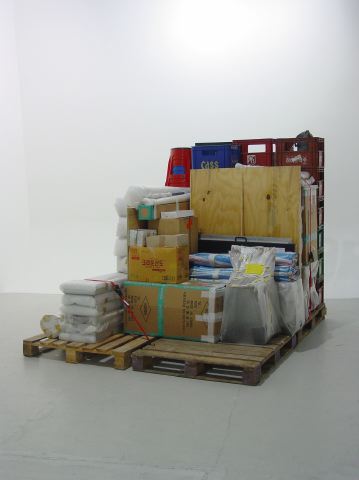
»Storage Piece« from 2006 by Haegue Yang. Steming from the situation of absolute lack of storage space, various previous works are transported and stalked in a pile on the wooden palette in order to fullfill another exhibition.